Favourite Language Arts Links

Wednesday, March 23, 2016

Lets do Inquiry!

Are you excited about teaching your students from an inquiry standpoint with the new BC curriculum?  Or are you feeling a tad nervous?  Do you enjoy being the sage on the stage giving all the questions and answers via textbook, or do you love the curious questions inspired from a delightful conversation?  As we ponder these new changes I would like to encourage you to try one new thing in the coming months before summer.  I hope that we can learn together as a community sharing resources and discovering AWESOME learning that ties into our students passions and beliefs.

Here are a few resources and tips that we have discovered along the way with Inquiry and digital resources.  If you would like an introduction to Inquiry catch up on the different types of inquiry here. Here are some tips for inquiry learning.

  • Help your students learn how to break down information with visual aids such as graphic organizers, webbing, mind maps or storyboards.
  • Communicate clear expectations and rubrics.
  • Create a timeline for a project which allows for deeper learning but is also practical.
  • Build in time to fail and start again, or add to an idea.
  • Provide ongoing feedback.
  • Help your student design an essential question by brainstorming why, how and what.
  • Share about primary and secondary sources, worldview or purpose in writing. 
  • Encourage your student to evaluate articles for bias.
  • Encourage your student's work ethic and applaud their final product.

Subscription Databases with an Inquiry base.

Science Power  (World Book) which is now part of our ERAC digital bundle brings you science with an a la carte menu!
Science Power uses extensive multimedia—including interactive animations, videos, illustrations, and photos—to teach upper elementary-age children core science concepts. Each lesson in the site is paired with an experiment, extension activity, critical thinking questions, quizzes, and websites to amplify the content of the lesson and promote learning. Pre and post assessments help students and teachers work in collaboration.
BrainPop and Inquiry
Many of you may love BrainPop and will be pleased to know that it ties in very nicely with the inquiry correlations.  Take a look at this page which Natalie did earlier this year and see how the alignments work for the new curriculum.  You will see lots of terms like science projects and scientific process! Mind mapping comes alive with the Make a Map. This is a great way to start your project using 21st century skills.  Game based learning comes alive in BrainPop with awesome quizzes and assessment tools to help your students move safely into the future, and have fun at the same time!  Read more about the research findings in regards to games and learning here.

Teaching students to understand bias is no problem if you use resources like What in the World and The Canadian Reader.  Both of these resources teach current Canadian and international events from a critical thinking base at lower lexile levels.
 The Canadian Reader / Nos Nouvelles is a classroom-ready current events resource for students in grades 3 and up. This publication, available in English and in French, combines current Canadian events and issues with geography to expand students' knowledge of Canada while enhancing their ability to read and understand informational text.  Here is an example of a reading strategy worksheet with an inquiry approach.
What in the World? / Le Monde en Marche (Level 1) is a photocopiable current events resource, published in English and French, for Canadian students in grades 5 through 7. Designed to enhance students' understanding of and interest in current Canadian and international events and issues, this publication addresses numerous curriculum outcomes while saving teachers valuable time.

Explora Elementary and High School which are the old Ebscohost sites teach your student about choosing the right keywords in searching, filtering their search using different criteria, how to access websites that are current, reliable and relevant and all articles, images and videos come with citation and copyright free for projects. 

Learn 360 comes aligned to the new First Peoples content relevant to British Columbia.  It also ties in nicely to Inquiry learning with  K-12 core curriculum videos, video clips, newsreels, images, speeches and other primary and secondary sources.


This wonderful tool will soon be aligned to all Canadian curriculum and boasts an easy breakdown of all subjects with lesson plans, STEM learning, health and more!  Students can find great ideas for STEM learning with projects and also build boards, and find writing prompts for that elusive essay.


Pebble Go is a unique grades K-4 database which covers awesome project ideas using lovely inquiry based Capstone books!
PebbleGo is a kid-friendly, searchable database that covers a variety of topics. Animals, earth and space, biographies, and social studies -- each sold separately -- are further divided into topics and subtopics. For example, the weather topic contains an investigation called "What are Clouds?" Every subtopic presents a five-part report with text, photos, videos, links to similar topics, printable assessment sheets, and a correct citation.
Kids can read on their own, or choose have text read to them. Each database also includes some simple games, an article of the day, a search field, and a poll related to article topics. For example, in the biographies database, there's a poll titled, "Which artist do you like best?" The teacher resource section/administrative account has comprehensive lesson plans, printable activity sheets, and some basic overall usage statistics (log-in frequency and popular articles).


Tynker is our most recent purchase in the learning commons, and we are very excited to see how our students in grades K-8 benefit from learning how to code!  This new subscription ties in very nicely with project based learning and critical thinking.  Students are encouraged to share their projects in an ongoing format.  Beth blogged about this new subscription here.

We have many books in our Overdrive and L4U with an inquiry base.  Natalie shared about some of our recent inquiry based picture books in this article here.

For our subscriptions please contact your teacher or Beth Johnson our subscription co-ordinator who will help you get going with links to passwords and tutorials.

Blessings to you and your families over the Easter season!

Pippa and the learning commons team.


Sunday, January 31, 2016

Reconciliation and Trust

Today in church we started on a new chapter of understanding the meaning of Revelations with the first letter 11:4.  We are examining the seven letters which John shared to the seven churches during that time period as a means of prophecy or voice.  Our pastor is leading us through the suffering that John experienced in his last years of what must have felt like horrible persecution, and his tribute to the life and saving grace of Jesus.  In all John could see Jesus working in Him through the suffering around him.


For me the passage was very meaningful.  Change is always difficult and this year in education and even in my personal life the Lord is taking myself and many of us on a new journey. One that acknowledges pain and suffering which has been experienced by many during a dark part of our BC history; the injustice towards Aboriginal peoples. 

Although I was not born in British Columbia I know first hand how the Lord had to move me towards a new understanding of grace.  I lived a privileged life in Apartheid South Africa because of the colour of my skin. But at an early age I could see the manifestations of injustice all around me, in the way people spoke to and shut out different groups.  Many groups of people lived on the fringes of society looking in, and in education there was definitely a sense of haves and have nots.  I was often called out in school for my outlandish ideas and refusal to accept the status quo and lack of human rights.  As a so called 'European' teacher I spent my first few years working in an impoverished area of Cape Town where political revolution was in the minds of many.  Students were taught from a biased and Eurocentric version of history, one which made them doubt themselves and their own identity.  I found it frustrating working within the confines of the system, and in my naive ways thought I could change the world with my 'Shakespearean' dialogues in high school.  The Lord had me in this place for a while to help me understand the universal rights of all our children.  I came away thinking that much change was needed before a new culture could be reborn in South Africa, one which embraced voice for all. 

Under the leadership of leaders like ArchBishop Tutu and Nelson Mandela South African people came to realize that out of forgiveness, truth and reconciliation a new understanding would emerge. A place where all people could give voice to the hurt and disappointment that had plagued the majority of its people.  The new term was called Ubuntu and it meant community,  "I am because of who we are" joined by a call to humanity.

As we look to the changes in our new BC Curriculum which finally calls for social injustice to be heard, along with the abuses in residential schools, new voices to our history may bring confusion and questions. The injustice to Acadians, Japanese and the Chinese should also be heard!  As God's community of believers it is important for us to understand and love all peoples of Canada, and that we would be known and stand apart for that kind of LOVE.  I would like to encourage you all to look to Jesus for all of our answers and may we rest in His final resolution of justice, peace, forgiveness and LOVE.  


"Grace and peace to you from Him who is, and who was, and who is to come, and from the seven spirits before the throne, and from Jesus Christ, who is the faithful witness, the firstborn from the dead, and the ruler of the kings of the earth.  To him who loves us and has freed us from our sins by his blood, and has made us to be a kingdom and priests to serve his God and Father- to him be glory and power for ever and ever!"  Amen.


Sunday, December 27, 2015

One Word

As we gear up for a new year this week maybe you are despondent to create goals and targets for 2016 only to see them fail dismally.  I have been there before and know only too well how they can be a set up, if you have not had time to pray and reflect on what you think needs to change within.

I started reading One Word that will change your Life by Jon Gordon (available on HCS e library) or here on Amazon,  and was immediately inspired by the simple concept.  This video encapsulates the vision behind one word.


My intention this week is to pray and ask God for my one word which reflects my vision for this year.  Already the word "Fearless" comes to mind.  With all the changes that have happened in education this year in BC I know I need to focus on being free from fear of change.  So I am going to ask my team to remind me and coach me with that prayer.


What is your one word?  I would love to hear how the Lord has inspired you to grow this year.

To find out more about the one word philosophy go to this website.

Blessings for a happy, healthy and spirit led new year in 2016.
Pippa

Friday, October 30, 2015

More than Ten Books to make your student WONDER

This past week I have been poring over some amazing books that we purchased for our physical commons!  These books, many of them Canadian will invite wonder, encourage imagination and allow your students to start making and creating, and learning more about God's diverse world.  They will also work really well to fit into our new learning outcomes 2016.

Elementary school

An Inuksuk means Welcome by Mary Wallace.  A central image in the Inuit culture is the inuksuk which frames this lovely book in an acrostic.  Readers will learn seven words from the Inuktiat language as they spell out Inuksuk.  The richly textured paintings will have you in awe! K-3


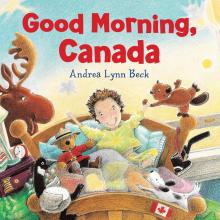
Good Morning Canada by Andrea Lynn Beck.This book invites students to reflect on their beautiful country with gorgeous illustrations and multicultural symbolism. Gr 1-3


Journey by Aaron Becker.  This luminous colourful book brings flights of fancy to any young reader.  As students journey through this book they will encounter their own amazing adventure as the book does not have any text.   Gr K-4.


The Legend of the Beavers Tail by Stephanie Shaw.  This lovely story encompasses the message "pride goeth before the fall" as Beaver learns that bragging does not beget friends. Gr 1-3


The Most Magnificent Thing by Ashley Spires.  This beautifully illustrated book is a wonderful story about the art of making, the process of project based learning and how growth mindset is so integral in the early years.  I read this one with my reading buddies and they were all happy to go and MAKE something. Gr 1-5


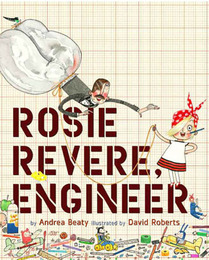
Rosie Revere Engineer by Andrea Beatty.  This engaging picture book tells the story of Rosie who dreams of being an engineer.  Rosie constructs inventions from odds and ends and afraid of failure hides them away.  But a visit from a great aunt shows Rosie that she does not need to fear failure.  K-4


The Elders are Watching by David Bouchard and Roy Henry Vickers.  This beautiful book created to enhance the natural beauty of our land and waters, brings a plea to respect the natural treasures we have been blessed with in British Columbia.  Gr 5-7 and High school.


Pirate, Viking and Scientist by Jared Chapman.  This inter-disciplinary picture book teaches science concepts in an engaging story as Pirate learns some fun terminology, creates a hypothesis and observes his experiment. Gr K-2.

Middle School

Fatty Legs and sequel A Stranger at Home  by Christy Jordan-Fenton and Margaret Pokiak-Fenton.  These chapter books deal sensitively with the topic of residential schools and social justice.  Both of these books inspire great conversation in the classroom, and are based on true life. Gr 4-9.


Hiawatha and the Peacemaker by Robbie Robertson and David Shannon.  The story of Hiawatha with enclosed CD sharing music by Robbie Robertson.  This journey of Hiawatha as he moves towards peace is brought to life with stunning oil paintings and lots of details.  With Hiawatha and the Peacemaker young people can as Robertson said learn about the real Hiawatha.  And given that Robertson includes the fact the Peacemaker had a speech impediment, I think people within the special needs community will find this book an invaluable addition to their shelves.


Thursday, September 17, 2015

Inspiring the next generation!

Recently I was tapped via Twitter to find my writing, presenting groove again. It's not that I have lost my interest in sharing the love of all things learning commons. It is just that I have a new love, my grandchild, Isabelle Grace.


 At two months old she is cuteness personified, and yes I am in love again just like a new mommy. But it is different. It is a love which is imbued with pride for how my daughter is raising our little munchkin. When I look at the unconditional outpouring of love I am reminded of how much how our Heavenly Father loves us! I am so encouraged by the bond that is developing and so excited to see how the next generation develops.

 So what are the future ideas which this new generation will seek to discover and learn in the 21st century?  With our new learning outcomes changing in the next year in British Columbia, and moving towards inquiry based learning, the learning commons is once again at the forefront of inspiring educational principles. How do we move ahead under the Lord's leadership?

 1. The learning commons continues to draw students towards discipleship, and collaboration with its MakerEd theme meeting all project based needs, and multi-sensory learning in a fun, engaging way. Character and true grit/perseverance, collaboration and curiosity make learning so much more inviting. Virtual book clubs encourage students from Grades K-12 to find their literary voice!  Students mentor younger students on the Ning, and in forums, helping prepare them for future digital leadership.

 2. Our students need to be prepared for a new "techie" society in Canada, that requires not only great multi tasking ability, but also a scientific approach to innovation and change.  Bring back the HYPOTHESIS! Lets make math and science exciting, and use apps, and concrete tools like Lego Mindstorms, Knex,  video, MakeyMakey, LittleBits, 3D printing and Keva Planks! Lets design our own curriculum with the student in mind, so that we can meet many literacies and learning styles.  We are blessed to do this in distance education!


3. The learning commons has always been a place of safety and peace, where students are allowed to find themselves. Free of assessment the teacher librarian may help students find the gifts, passions of their heart.  Too often tests have been the focus in education, and have not served the best interest of our students. Lets get involved in making assessment more creative and innovative by setting new standards which encourage creating, evaluating and analyzing, so facts get remembered for the right reasons.  Really the learning commons has always been a catalyst for Makerspaces.

http://bit.ly/1KoVpuS


4. Lets make learning equal in the digital divide. Lets provide open access to our learning commons so that all students will benefit from digital access. But also let us find ways to bring out humanity and the inner beauty of our students, by encouraging the different literacies, enhancing student voice and letting go of the need for speed via digital devices. Use technology when it helps a student overcome the barriers of distance, or serves a greater purpose.  Overdrive E library has been a revolutionary innovation in the learning commons for removing digital inequalities.  As textbooks, movies and audiobooks become streamed we can capture all learners with engaging resources. Subscription databases such as Ebscohost, Discovery Streaming, Learn 360, Reading Eggs, MathSeeds, Dimension U all allow students in remote parts of BC and the world to find information that is accurate, engaging, fun and digitally relevant.

 5. The learning commons gives purpose to students need's, and finds ways of matching up student interest and ability, with the talents of a nurturing and inspiring librarian. Lets find materials that enhance the classics and literacy again, including ways to read Shakespeare, Dickens and Plato! From graphic novels, read aloud days, reading buddies, poetry slams, writing workshops, drama and film making, video games, and scavenger hunts to find that special book, lets make learning FUN!

How can we help prepare your students for the future?  Please comment as I love to glean from you.

Blessings
Pippa and the learning commons team.

Sunday, March 22, 2015

whats Love got to do with IT?

This past month we have been exploring the Love of Jesus Christ at church (Peace Portal Alliance in South Surrey).  I was struck this week with our pastor Scott Dickie's passion for the demonstration of LOVE in our community.
For God so loved the world that he gave his one and only Son, that whoever believes in him shall not perish but have eternal life.  John 3:16 Int.  

If we truly believe that Jesus died for us and his love and mercy endures forever why do we become so stagnant in our personal lives.  Why do we hold onto our idols and fail to turn to Him when we need Him MOST?  I think we hold on to the lie that we cannot do more than what we are doing because we are too busy, too tired, have too many of our own problems, or we are just one person and cannot initiate change. We leave the missionaries to do the job of helping others.  Yet our own community is failing to see the need for church and Jesus in their life.  Is it because we have left this to others to serve in our own community.  How can we hack our own community to see what needs matter most?

 I know that the message this morning at church impacted my own sin of holding onto my future financial plans instead of TRUSTING how God could use me to further HIS goals.  I always find at this time of year with taxes, and financial planning it is so easy to put one's owns needs ahead of God's plans.  God is gracious to clean my slate as soon as I run to HIM.

God has called us to serve one another in LOVE and disciple our next generation.  We are called to work things out for His Glory.

Our school's vision is to raise disciples and spread the Gospel into the homes and lives of our young people.  Are we working towards that end in our learning commons?

 How do walk alongside broken people in our work, in our community centres, in our 'makered' workshops, book clubs etc.  Are we serving a LIVING GOD, one who can produce CHANGE?  I think it is only when God changes our hearts that we can truly repent of our sin, give glory to HIM and start afresh in our community sharing our stories.

I know God wants my whole heart.   Going to give that extra piece I was holding back to Him!
http://thumbs.dreamstime.com/t/missing-heart-piece-19527704.jpg

Wednesday, January 28, 2015

Inspired to Lean in and Learn #FETC!

This past week I was privileged to enjoy some professional development at #FETC in Florida with thousands of other amazing #edtech leaders and our HCOS curriculum consultant Natalie Sing!

Here are some of my take-aways!
1.  Gamification of learning is a popular educational route and as IMT is big at HCOS it was interesting to hear Jane McGonigal, Director of Game Research, Institute of the Future share emerging technologies in this regard.   Do games make us better?  Here is a short video on her reasons for gaming!

2.  Augmented reality is here to stay!  Lesley Fischer presented on this topic with excellence.  Top apps that caught my attention:
3.  Other notable apps shared by different leaders!
4.  Maker Movement!  I was thrilled to listen to Sylvia Martinez author of Invent to Learn.  All I have to say is READ her book, and see how she is inspiring younger makers with the Superawesome Sylvia shows!  This young entrepreneur takes making to a new level.  Martinez has so many amazing things to share including the process, the plans, some ideas for establishing a #makerspace, and the encouragement to take risks and make mistakes!  We are very blessed to have our own makerspace this year in the learning commons, and are eager to learn from maker teachers/library staff in our schools who are running Lego-Mindstorm camps, Makey Makey camps and other 3D printing learning.  Here is Sylvia sharing on makered in your school.

5.  Innovation- Inspiring learning from David Sengeh, Innovator from IMT Lab and his inventions for comfortable prostheses.  His advice for innovation in education was to encourage the why questions, motivated from empathy, compassion and a desire to help others in community.  I loved his message of Hack your own community to discover how to help others!  Here is his TED Talk.

6.  Change- Preparing for change requires listening skills, surveying your patrons, a planning process, patience and remembering who you are serving.  Important tips to remember before implementing change from Google guru Rushton Hurley.

7.  3D printing is happening in your neck of the woods.  Watch for all kinds of applications as students connect real life applications, and become engineers and designers.  Makerbot is the printer we purchased for our learning commons and I was pleased to glean more about these machines from the keynote CEO of Makerbot. Making 3d in your classroom has never been more fun!  Our learning commons team is learning the ropes via your students as they make. :)


8.  Global collaboration and open access!  Stuff of which our learning commons thrives on!  I loved sharing on Twitter and met some other amazing educators in the process.  I also met the CEO of AT&T while flying to Florida and gleaned some wonderful tips re innovation! Professional development is a wonderful process to be appreciated and shared! #longlivelearning


Blessings
Pippa


Monday, December 1, 2014

Reading for the Holidays!

http://bit.ly/1rPXTdL

Our learning commons has some amazing teacher/student professional development/non fiction in HCS Overdrive E library.  Just grab your passwords and come and enjoy some great thinking material.

Some of my favourite reads include:

The Conviction to Lead by Albert Mohler
Humilitas by John Dickson
Spiritual Leadership by Richard Blackaby
Start With Why by Simon Sinek
Half the Church by Carolyn Custis James
Good to Great  by Jim Collins
A Whole New Mind: Dan Pink
The Element : Ken Robinson
Daring Greatly Brene Brown
The Greatest Gift Ann Voskamp

For our teens:
Heaven is For Real by Todd Burpo
The Habits of Highly Effective Teens by Stephen Covey
365 Days of Wonder J Palacio
No Compromise:  The Life Story of Keith Green
Blue Like Jazz by Donald Miller

Christmas materials ; from devotions, Advent books,  to fiction classics, something to read by candlelight!

Blessings
Pippa

Sunday, October 12, 2014

Makered in the Learning Commons


Themes come and go and this year is no different in the learning commons at Heritage Blended Commons.  Stepping into maker spaces and all things #makered has been another pivotal moment for  advocacy in the learning commons, and completes part of our vision statement for the year 2014/15.

The learning commons has purchased Makey Makey kits, a Lego Mindstorm classroom set ( for 24 students), and Knex Kits along with a 3 d printer with the Mini Makerbot as the front runner!  Our campus learning commons champion Jessie starts our first Makered club this week, and 20 excited campus students will work with Makey Makey, and Knex kits to discover Motion and Aeronautics outcomes.  They will also learn how to make a video based on their innovative findings!  As a virtual media specialist I so want to be a fly on the wall!!

So why makered and why learning commons?  The whole vision behind a learning commons is the creation of a welcoming space which encourages all literacies, and fosters relationship.  Makered allows for digital, science, and computer literacy, not to mention hands on learning in the learning commons.  Students will work in teams building collaborative working relationships.  During the process we hope they will take risks, and learn to become inventors, as they coach each other in the learning process.  Every teacher wants to empower their students and we hope this will bring new passions, leadership, discipleship and excitement around science and technology.

During the last two years we have fostered the creation of a virtual commons, using Ning as a playground for building, and in doing so created a philosophy behind the experiential building centre. We host competitions and share our students artistic, writing, and musical gifts.  Now we hope to further this into the physical realm with hands on learning.

The learning commons vision has never looked more exciting!

If you have not discovered the upside of all things #makered you might want to read the following articles:

What's the Maker Movement?

The Makey Makey Might Change the Game.

Seven Hands on Projects That use 3D Printers.

Or watch this intriguing video!


We are thankful for a new invitation to bring students into relationship via multiple literacies in the learning commons!  Now more than ever a learning commons is a place to play, read and build!
Blessings
Pippa


Saturday, July 12, 2014

Graduation and Beyond

Today I sat down and reconfigured my blog.  Now that I have a work blog I find it hard to get back and just blog for the sake of blogging, personal blogging, sharing my vulnerabilities.  But my life has changed and my children are graduated and moving ahead with their lives.   I am feeling nostalgic and want to move ahead with them...to reach out and study something new, exciting and invigorating, to follow, and perhaps not to lead. Oh to be a student again, to listen, inspire and create!  Having adopted a learning commons vision over the past three years in our district library,  it was good to learn, inspire and lead.

Creating vision takes time, as does encouraging your team to stay inspired, motivated and working towards that vision.  At times I remember feeling that roadblocks were an important part of the process; sometimes painful, but mostly gratifying at the end.  Staying committed to the culture of building a learning commons, has required faithfulness and resilience.  Ideation is second nature to me, and so dreaming BIG for my team was, and still is, really important.  But there is that still small part of me where I long to let go, and just be a follower and not a leader.  Grace and surrender are an essential part of learning.  And then there is time to just rest, read and dream.

Sometimes I think I am an adrenaline junkie,  or maybe simply attention deficit?  I do know that staying the path is important, as is listening to the inner child.  I am trusting that one design leads to another in our learning commons, that change will keep happening for the right reasons and not because I need change for change sake.  I am excited about the next step, about learning whatever it takes to keep building, following, and leading in the learning commons!


Friday, May 23, 2014

Blessings!


Today I am encouraged!
Ten years ago I started working at HCS schools.
I initiated relationships and learned how to be a follower and a leader.
I discovered the joys of learning and working from home.
I homeschooled my son for 7 years and watched him grow, struggle and lean on the Lord.
I saw families united, and I watched families struggle with divisiveness.
I saw children fail, and I saw children thrive and blossom.
I saw grief, and I heard laughter, singing and joy.
I learned the value of praying as an individual, family and as an institution.
I learned the value of community.
I learned how to listen.
I am still learning how to evaluate, assess and encourage.
I still make mistakes.
I am still growing in the wisdom of the Lord.
I am still on the path towards maturity in Christ.
But I am encouraged.
I find joy, peace, love and inspiration in my daily walk with God.
I am blessed!


Sunday, May 4, 2014

Reading Strategies

http://iamachild.files.wordpress.com/2011/07/a-quiet-corner.jpg
Students who school at home have a distinctive advantage over students who learn in brick and mortar when it comes to reading. They have the most obvious motivator: TIME! But there are other strategies and skills which need to be in place before reading can take hold. Sharing strategies implies that you have a core foundation of skills. But in order to become an effective reader all students need to acquire a sequence of skill sets before they can read.
  • Sequencing skills
  • Making judgements from images and spoken word
  • Noticing details
  • Deciphering story structure: i.e. beginning, middle and end
Open ended story telling comes from teaching children to read using: previewing/prediction skills; asking open ended questions about the story sequence and characters; details in the story and the main ideas; as well as drawing conclusions.  Story telling should be an interactive process,  with your youngster sharing the story more than yourself.

Check out these great video clips on establishing pre -reading skills from the A.L.A.  Encouraging your pre schooler to think out loud, or responding to open ended questions will help them become engaged with the words and images on the page.   Role modelling the joy of reading will enhance parent/child attachment, and he or she will be more motivated to see reading as a delightful opportunity to engage with you,  and with the written word.

Read to your younger children on a daily basis,  or share your favourite audio books from our E library if you are needing a break :) To discover the importance of why reading aloud to older children is also valuable read this great Mindshift article. 

Next encourage your student to recognize letters and print.  Once your student has learned the alphabet using supplementary aids like Reading Eggs (subscription with our school), Starfall  or reading games with ABCYA they are on the way to retain fluency and learn some reading comprehension skills.  Start them on a sequenced set of readers which will help them retain and learn basic vocabulary and simple sentences.  If your student does not develop these early sequential phonemic skills, talk to your teacher for ideas on how to help improve your student's reading skills which will lead to better strategies.

Once your student has these basic skills include lessons for your primary student to start learning the strategies required to become a good reader.  Lesson plans on this Teacher Vision page along with this Reading Rocket's page will help teach semantic mapping skills, story structure and summarizing ability.  Encourage your fourth grade student to decipher fiction from non fiction using Scholastic's BookFlix, another wonderful subscription from our school.  For all subscription usernames and passwords please check with your teacher.

Do you have a favourite reading tool which you have found to really enhance the process?  Please share with us!

God Bless
Pippa


Sunday, March 16, 2014

Conviction to Lead


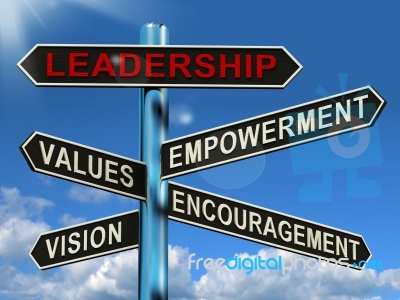
In the last five years my new, best reading topic is leadership or business.  I am often blessed reading how God uses His story to bring certain characters into the spotlight to serve.  These characters may have undergone several struggles or hardships in their lives, but time and time again are forced to lead from a heart of conviction.

In the book The Conviction to Lead  by Albert Mohler, twenty-five principles of leadership are shared from a Biblical perspective.  Many of these principles may have been shared in other business books, but within this book all passages are presented with Biblical evidence.

The 25 principles include:

  • Purpose
  • Belief leads to Action
  • Convictional Intelligence
  • Leadership is Narrative
  • Leaders understand all world views
  • Leaders have Passion to lead
  • Leaders are Thinkers
  • Leaders are Teachers
  • Leadership is all about Character
  • Leaders are Credible
  • Leaders are Communicators
  • Leaders are Readers (LOVE this one)
  • Leaders understand that Power is not an end to Itself
  • Leaders are Managers
  • Leaders are Speakers
  • Leaders serve and act as Stewards
  • Leaders can make Decisions
  • Leaders have Moral Virtues
  • Leaders know how to use Media to deliver a Message
  • Leaders know how to Write
  • Leaders understand the Digital World and use it for Discipleship
  • Leaders know how to use Time wisely
  • Leaders know how to Endure
  • Leaders know they will Die and need to be replaced with others of conviction
  • Leaders have a Legacy. 
Do you know leaders who personify these traits?  Whether teacher, parent, student or school principal,  God can use all of us if we stay true to our convictions.

Blessings
Pippa


Saturday, January 18, 2014

Reading Differences or Gifts!

Words are a gift no matter how we read them.

This wonderful video shares the beauty of words and stories from the mind of a Dyslexic.  Experiencing Dyslexia in my family I have advocated for many years on behalf of my children to help them assimilate the written world within their day to day existence. What may appear so easy for one child, may be so horribly difficult for another!  Yet the majority of teachers do not teach students in multi-sensory ways, to be able to recognize the cadency in a sentence.  Sequential learning is something that needs to be integrated on a daily basis both with sounds and with words.  It is very hard to do in a brick and mortar classroom.

These wonderful role models share their confidence despite having experienced so many obstacles in their path towards learning.  Having read Malcolm Gladwell's book David and Goliath, it was so encouraging to hear how the role of being straitjacketed or treated as an underdog is actually an advantage to overcoming such disadvantages, and learning compensatory skills to think "outside of the box" may actually be a gift.

Many home-schoolers are Dyslexic.   Many have struggled to stay within the constraints of a brick and mortar classroom.  With the use of technologies such as reading aids, speech recognition software, multi sensory tools, audiobooks available in e format, changeable fonts, and focus on verbal skills to bring out confidence,  students CAN overcome great feats.  Dyslexia is not the challenge it was in the past.  Having raised a Dyslexic student who also struggled with anxiety as a result of being misunderstood, I have a huge heart for all students who struggle in this area.   

Some ideas to foster in your child.

Go the long road to work out a system which works for your students, encourage, read to them, engage literacy and role model reading on a daily basis.   Find their gifts, and help them appreciate the written word regardless of how they learn.  Listening to stories is just as wonderful as reading them!  The power of the spoken word is so ENCOURAGING.

You are blessed to be the parent of a Dyslexic child!  I am blessed to see my son read and write essays albeit slowly, with precision and a "wordsmith's" creativity in his grade 12 year!

Thanks to Ted Talks for sharing this video.  It is well worth an hour of your time.


Wednesday, January 15, 2014

I think therefore I blog

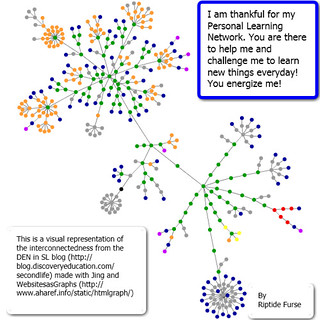
Thankful for my network
Thankful for my network (Photo credit: krossbow)

Three years ago when I began my adventure on Twitter, I was amazed at how I could find such value added professional development at my fingertips.  Having blogged for a few years as a teacher librarian for a distance learning school,  I realized that having VOICE was something that resonated deeply within me, and many of my colleagues and students.  I had taught my students  about academic authority, sharing ones passion and reflecting accuracy and currency (all those lovely teacher librarianship question's).  But now the crunch was up!  Could I role model that myself? Could I learn all these weird and wonderful hashtags, how would I engage in virtual chats, and could I make friends with strangers? 
Three years later I am loving the ENGAGEMENT!  Discovering curation and sharing on Scoopit, Twitter, and other social networks like Ning,  has widened my knowledge base, helped me research pertinent scholarly articles, archive for my patrons, and also help me make friends.  One of these friends and fellow teacher librarian from England Elizabeth Hutchinson   collaborated via blog and virtual classroom with our campus and distance learning grade 6/7 students, on Chocolate Lily and Kate Greenaway children's' books.  We hoped our students would imbibe cultural sensitivities and global awareness as they studied the language similarities and differences between England and Canada.  We laughed at our accents, shared our silly phrases, and reached out to connect on a heart level around picture books.
On our Ning (a private social network within our distance learning school) we teach digital citizenship skills, such as media sharing, blogging, discuss issues such as cyber bullying, collaborate in online book clubs and participate in events such as our Innovator's Challenge.  We trust and value our relationship within this private and safe community.  
So what I hope to share from this conversation is how we can have virtual relationships using social media.  I was in a library advocacy workshop recently,  and I heard the presenter share that social media is not a place for advocacy.  I would strongly disagree!  Enjoying ten years as a virtual teacher librarian... this is my world and most of my students' world.
I do believe that we are called to reach out, love, respect and accept one another regardless of our background.  As Gust Mees @KnolInfos my Twitter friend shared  we thought it would be pertinent to create a multilingual social media dictionary for other educators to share their thoughts on the positive and community forming bases for social media.  We can do that in 30 words or in 3 characters.  The choice of words we use can either build up or bring down.  It would be cognizant of different languages, ethnic and religious backgrounds.  Thankfully on Twitter I have seen mostly positive encouragement!  I have also seen poetry in reduction.  As a wordsmith in hiding I LOVE it! We welcome your thoughts!  Thanks Gust Mees@KnolInfos for starting a blog to collaborate on such thoughts!
Enhanced by Zemanta

Monday, November 18, 2013

Social Media and Parental Presence

facebook
facebook (Photo credit: sitmonkeysupreme)

This past week I  watched a very sad indictment of the "Sextortion of Amanda Todd" being aired on CBC The Fifth Estate, to commemorate the anniversary of Amanda's death.  I was horrified to hear how twelve and thirteen year old teens are sharing lewd images of themselves on group blogging and webcam sites.  I was even more than horrified to see how online predators could take advantage of such students,  and blackmail them into sharing more revealing images.  This tragedy exemplifies some insidious dangers inherent with image sharing sites,  such as SnapChat and Instagram, and with private chat rooms.   Media literacy is not the topic on display, and images provoke more than just fear, or isolation, they can provoke students to suicide.

This brought to mind many ways as parents we need to be involved in our students' "online time"?

You will often hear students saying that the time they spend alone on their computers is private and they have the "rights" to not share their online behaviour.  Not only are cases of cyber bullying on the increase,  many are not being reported for fear of reprisal.  Often the RCMP cannot respond to complaints in time,  due to the nature of time sensitive issues regarding the Internet.

So what can we as parents/teachers do in this situation?

  • Help our students gain awareness of maintaining appropriate digital citizenship, about creating a digital footprint, empowering them with rules and behaviour for fostering online friends.
  • Consider and decide how your family may choose to monitor online and offline conversations.  Teens are often awake late into the night when lights go out. 
  • Encourage loving relationship with your developing teen,  that includes lots of openness to discuss all kinds of  topics.
  • Discuss and encourage safe digital citizenship such as those found in moderated sites like our school Ning.
  • Discuss and apply safe strategies around online activities in group Skype/webcam/google hangout chats if there are no moderators. 
  • Discuss why there are age restrictions set by social media sites.  As a parent you know your child's emotional maturity and ability to communicate responsibly.  You may choose to wait until your student is 13 or older before establishing a social network profile.
  • Pray for your students to imbibe wisdom in relationship, and in sharing personal information and healthy self esteem.
My prayer is that as a community we can be accountable for all of our students, and that together we can partner with you as parents to help keep our students safe.


For information on sites which can help you deal with bullying and preventative education go here.  To watch a great powerpoint with good discussion topics go here
Enhanced by Zemanta

Saturday, November 9, 2013

Digibraians Unite!

Gone are the days when librarians enjoyed the tight lipped, over controlled persona,  where students and parents feared your presence and eagle eye!

In the quiet dungeon of such library tombs the sound of the date stamp as it thundered onto your book was quite frightening!  Worse than that, losing a book was a life sentence!


http://schoollibrarybeyondsurvival.files.wordpress.com/2012/03/bookcomic4.jpg

Welcome to the age of the "Digibrarian" where literacy is not limited to taking out a hard cover book and returning it on said due date.  Instead the role of teacher librarian, media specialist, or as we now call it "Digibrarian",  has taken the bull by the horns and entered the twenty first century leading the literacy highway.

Digital literacy may encompass many skills which require superb multi-tasking, from : financial literacy; reading literacy; physical literacy; ed tech literacy; art and music literacy; project based learning and inquiry learning.  The list goes on…. and the "Digibrarian" rises to the fore with new and wonderful #makerspaces!  To see all the #libraryawesomeness check out this  infographic!

In our learning commons Digibrarians  may be found:
  •  creating techie tools/bibliographies for patrons, 
  • sharing the joy of  e books, audio books, 
  • creating presentations on digital citizenship,  and social media, 
  • creating havens like Ning to encourage students to learn about social media and digital citizenship
  • helping students refine the research process using tools that fit their learning style  
  • creating a myriad of techie and literacy events to highlight and promote the learning commons.  
  • reading and role modelling literacy  
  • supporting a nurturing and welcoming space for all students 
  • shipping materials to patrons all over the province and beyond
  • writing and editing resources for patrons in the form of kits and supplements.
  • Correlating curriculum.
  • blogging and creating websites 
  • teaching how to use academic databases and Google
  • curating on different media outlets and sharing to social media
  • leading  

 To help Google; curators of the Internet otherwise known as Digibrarians are here to save the Day!

Digibrarian Hero!
http://content-2011.mozillafestival.org/uploads/2011/08/hackasaurussupergirl.pn
Please add all the extra missions you do as a "Digibrarian"?  I am sure I have left out a ton!
Blessings
Pippa

Josh Garrels - Pilot Me (from "The Sea In Between")

My new best inspiration of the week.  I absolutely love this song.  Morning worship wake up and shine! Thanks Kevin Gourley for sharing on our music polling competition on the Ning. Thanks Josh Garrels and Pilot Me.